 Kamal Ghorui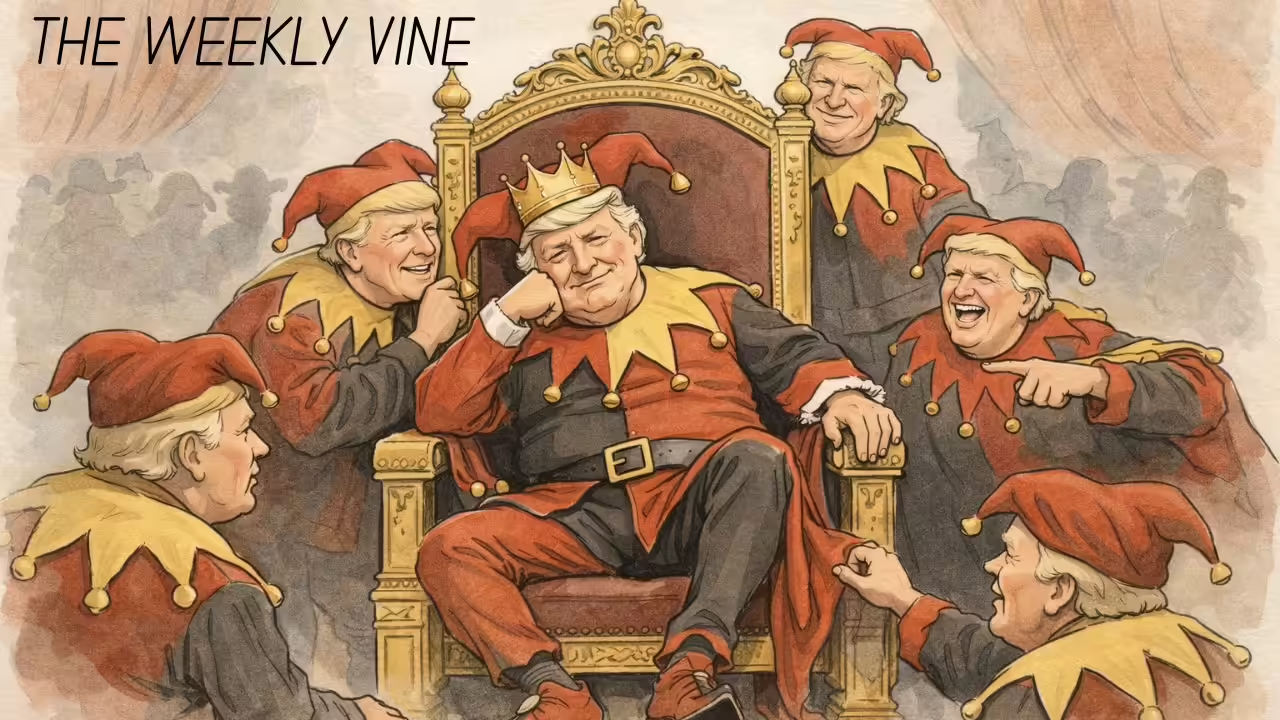
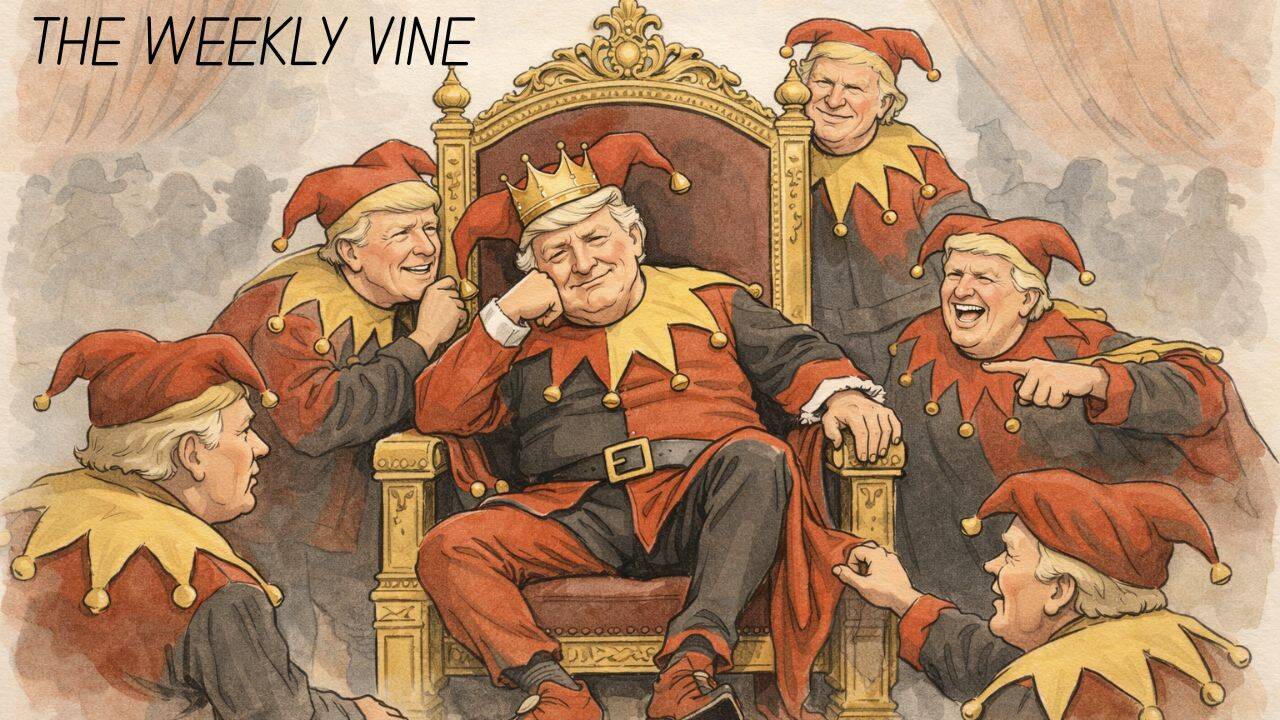

Hello and welcome to another revamped edition of the Weekly Vine. Horrified by World War I, TS Eliot called April the cruellest month, where lilacs die. I don’t know much about lilacs – I doubt I would even recognise one if I saw one – but on the first day celebrating fools, my water pump stopped functioning, I suffered from the Karna curse while hailing an app-based cab, and a Florida man on the other side of the world is ruining my colleagues’ chai breaks. So maybe Eliot had a point.
In this week’s edition, we look at Trump asking American allies to get their own oil, discuss IPL-style decolonisation, ponder the fake dog story that gave us hope, and discuss the scarcity of journalism in the era of content.
GYOO – Get your own oil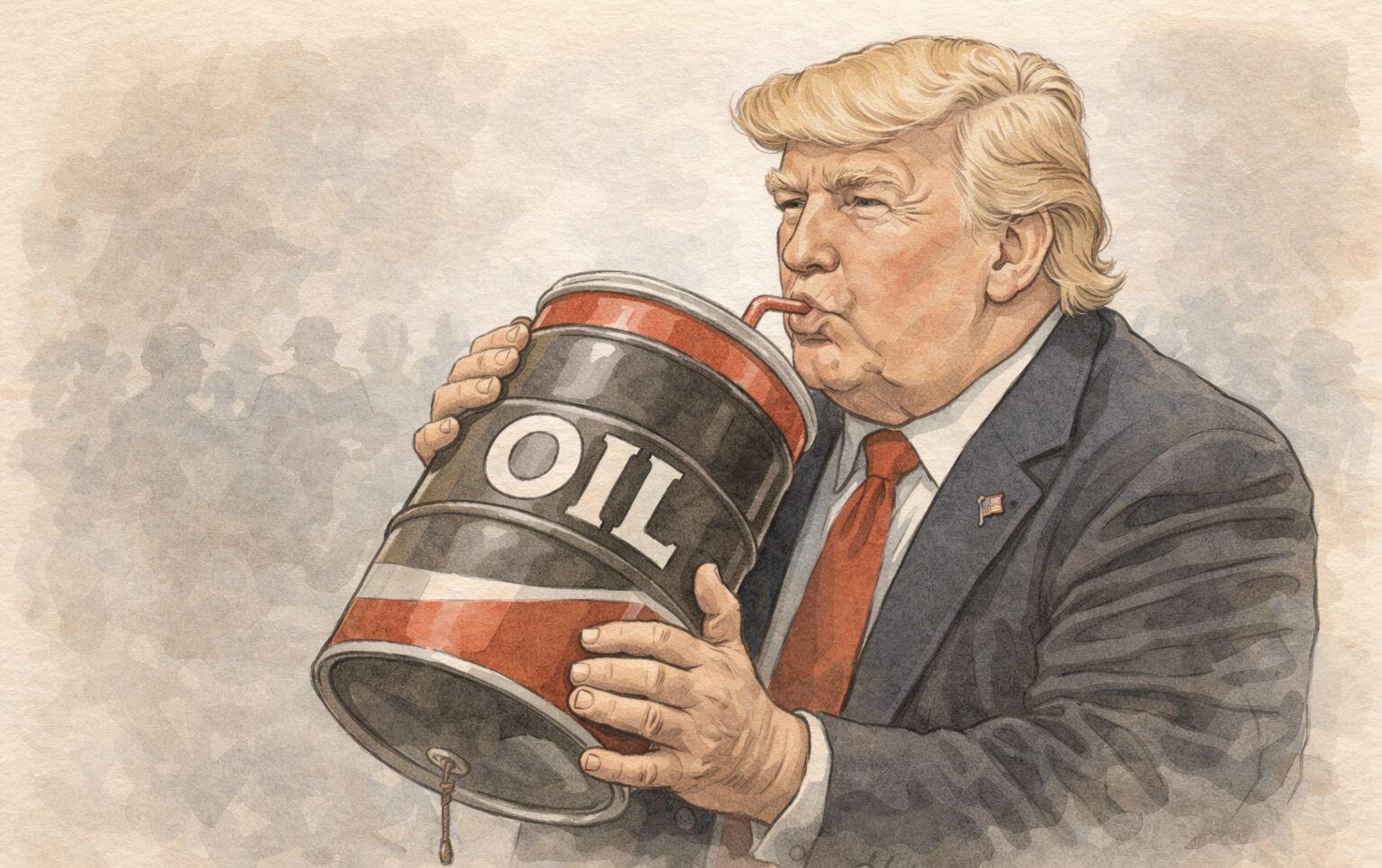

Scholars have often talked about living in a post-truth world, but no one predicted its main protagonist would be the leader of the free world. Take the war in the Middle East. No one quite knows why the US and Israel chose this exact moment to strike Iran. Various vacillating reasons have fought their way into public discourse – including on-record statements from the White House, off-record laments from the White House, and unfiltered outbursts from Truth Social – none of which have given an adequate answer.
It’s the first true Schrödinger’s war: one that is waging on even as Trump has already won. So far, the various hypotheses have been more ludicrous than the last. The first was regime change, which hasn’t happened, and Iran’s enemies clearly underestimated the power the IRGC wielded in Iranian society. The second has been wanting Iran’s oil. Trump has also used historical framing, including the 1979 hostage crisis, to justify the action. Acolytes have argued that it was a pre-emptive act of self-defence. Or to prevent Iran from getting nuclear weapons. That Israel was going to strike anyway. That it is God’s will.
All in all, no one still has a clear answer, nor do we think we will get one. All we can do is check our social media feeds, and the latest (at the time of writing) was Trump perusing one of the maxims of every house party in our youth: BYOB, better known as bring your own booze. Except Trump is not bringing booze; he is asking US allies to either ‘get your own oil’ from the Gulf – which is inflamed thanks to the war started by the US – or to buy it from America.
In an ordinary post – to call the outbursts extraordinary anymore is redundant – Trump asked European powers to “build up some delayed courage”, “start learning to fight for yourself” because the “US won’t be there to help you anymore”.
As Nixon’s henchman, Henry Kissinger, a warmongering moral vacuum who also managed to wangle a Nobel Peace Prize for himself, famously said: “It may be dangerous to be America’s enemy; it’s catastrophic to be America’s friend.”
Read: Is Donald Trump condemned to behave the way he does?
Decolonisation: Desi Style
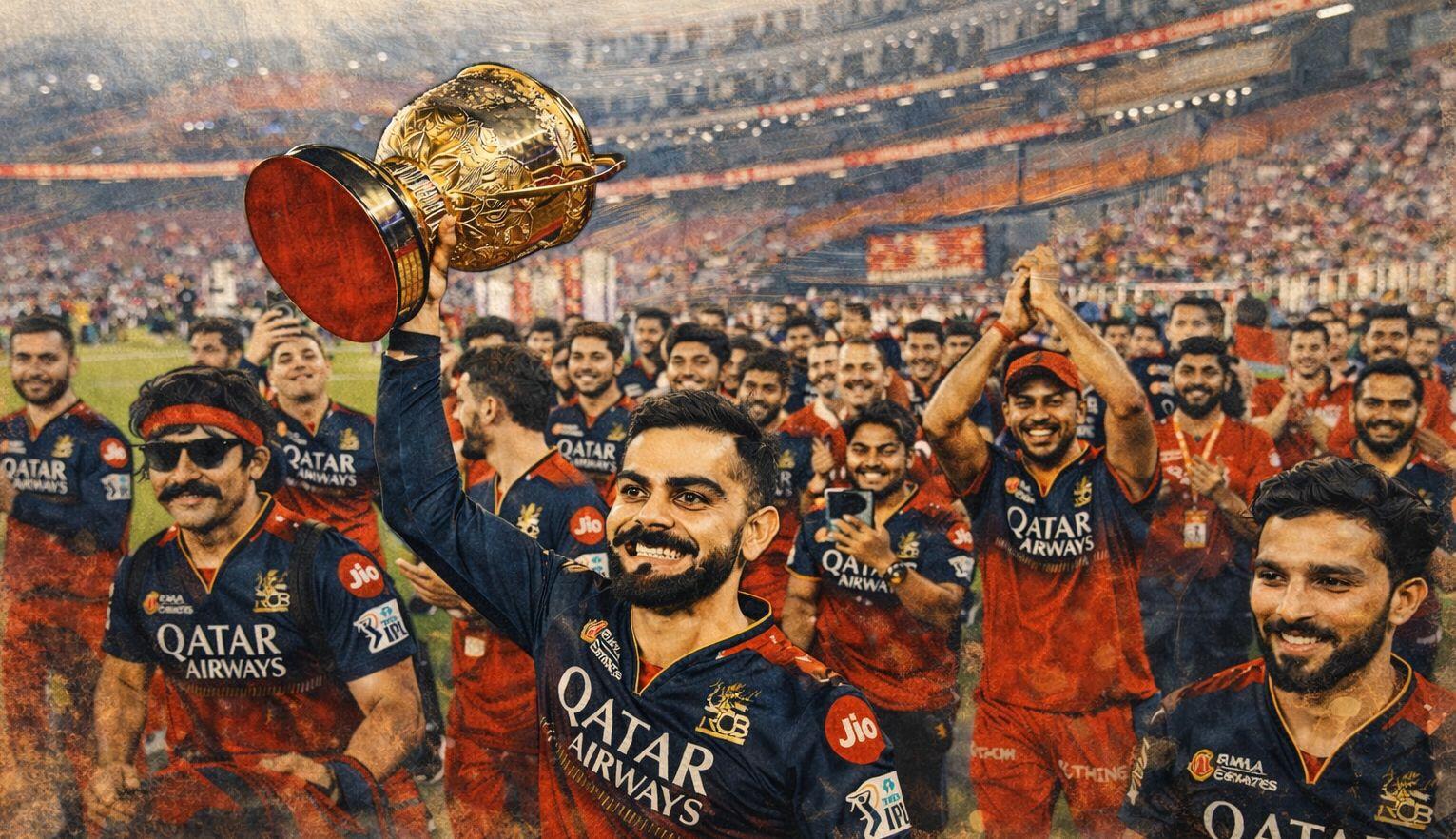

A tweet by a Somalian-American Teen Vogue writer had gone viral after the Hamas terrorist attack on October 7, 2023, that read: “What did y’all think decolonisation meant? Vibes? Papers? Essays? Losers.” It’s a question I have often pondered on my travels – metaphysical and physical – what is true decolonisation? Is it celebrating acts of terror? Knocking down statues of Churchill and Washington? Refusing to read William Shakespeare? And I think the closest I came to that answer was sometime in Jan 2024, when the Indian Navy captured some Somali pirates, one of whom was donning an RCB jersey.
That, in essence, was the true spirit of decolonisation: that a pirate halfway around the world was moved by the travails of Kohli and Co. And that, my friends, is true decolonisation: not vibes, not essays, not papers, and certainly not paragliding terrorists.
True decolonisation is power – Mammon-like power, so much power – that your former colonisers are compelled to dance to Telugu reels or write angry op-eds in British broadsheets about how India wielding too much power in world cricket is just not cricket. The Indian Premier League – warts and all – is the perfect example of decolonisation. It’s not about rejecting the world that existed before but dictating how it operates.
Cricket might have been the language of the colonialists, but today its grammar, dialect, vocabulary and syntax are dictated by the formerly colonised. The same empire that once lectured the world on what was “cricket” now finds the rules rewritten – and, one suspects, not quite cricket anymore.
The billion-dollar sales of two franchises of an 18-year-old league, for a sport that many in the world still don’t understand, show just how far the league has come in such a short time.
PS: It’s quite feasible that the Somali pirate was just wearing a hand-me-down, but as my father says: “Khayali pulav mein ghee ki kami kyun.” Also, for those confused, “it’s not cricket” was commonly used in British parlance to mean: it’s not fair.
Dogs of Hope
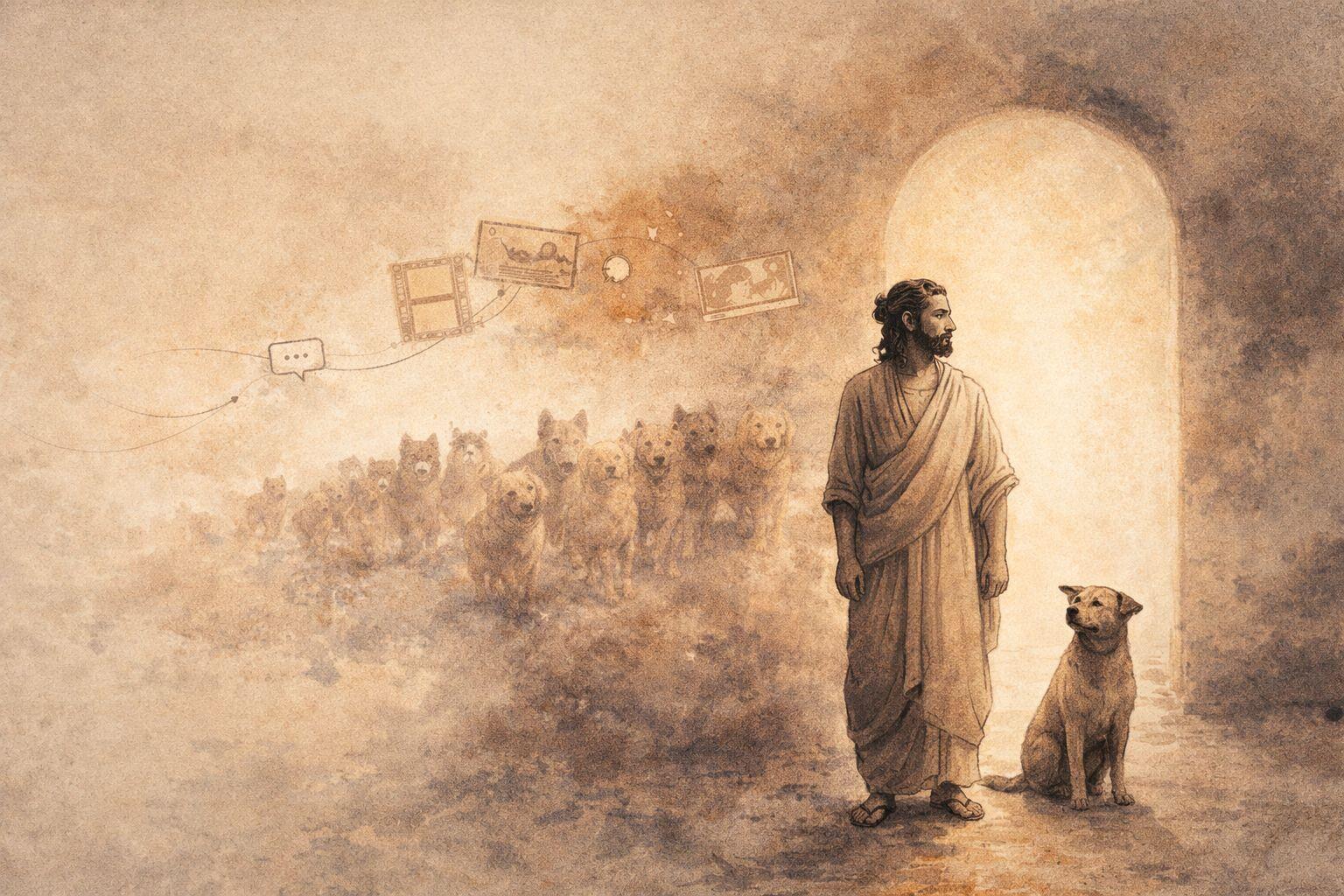

Yudhisthira, the eldest of the Pandavas in the Indian epic The Mahabharata, lived an almost sin-free life. After the battle, with old age approaching, he, along with his brothers, set off for heaven.
En route, all others shuffled off their mortal coil except the eldest brother and one dog who accompanied him on the journey. At the gates of swarga, Indra, the king of gods, told him he could enter, but he would have to leave his stray companion behind. Yudhisthira, also called Dharmaputra, refused to abandon his canine companion. It turned out to be a test. The dog was Dharma (Yama), testing Yudhisthira’s moral resolve.
The dog story is fascinating because it recalls the only time in life when the eldest Pandava prince was found morally wanting. That was on the battlefield, when he told a white lie by omission to Dronacharya: “Ashwatthama hata iti… narova kunjarova.” (Ashwatthama is dead… whether man or elephant, I do not know.)
The smallest of lies changed the tide of battle and, as Dronacharya laid down his arms, Dhrishtadyumna, son of Drupad and brother of Draupadi, slew the warrior teacher. Much like Yudhisthira’s white lie, the tale of the seven dogs returning home — a viral video the internet fell in love with — is only partially true.
The video is not AI; it is not fake, but the narrative is. The original video had millions of views at the time of writing. For those living under a rock, the clip shows a band of canine misfits — a golden retriever, an injured German shepherd, and a tiny corgi leading the line.

Postscript by Prasad Sanyal: Plenty of content but a shortage of journalism
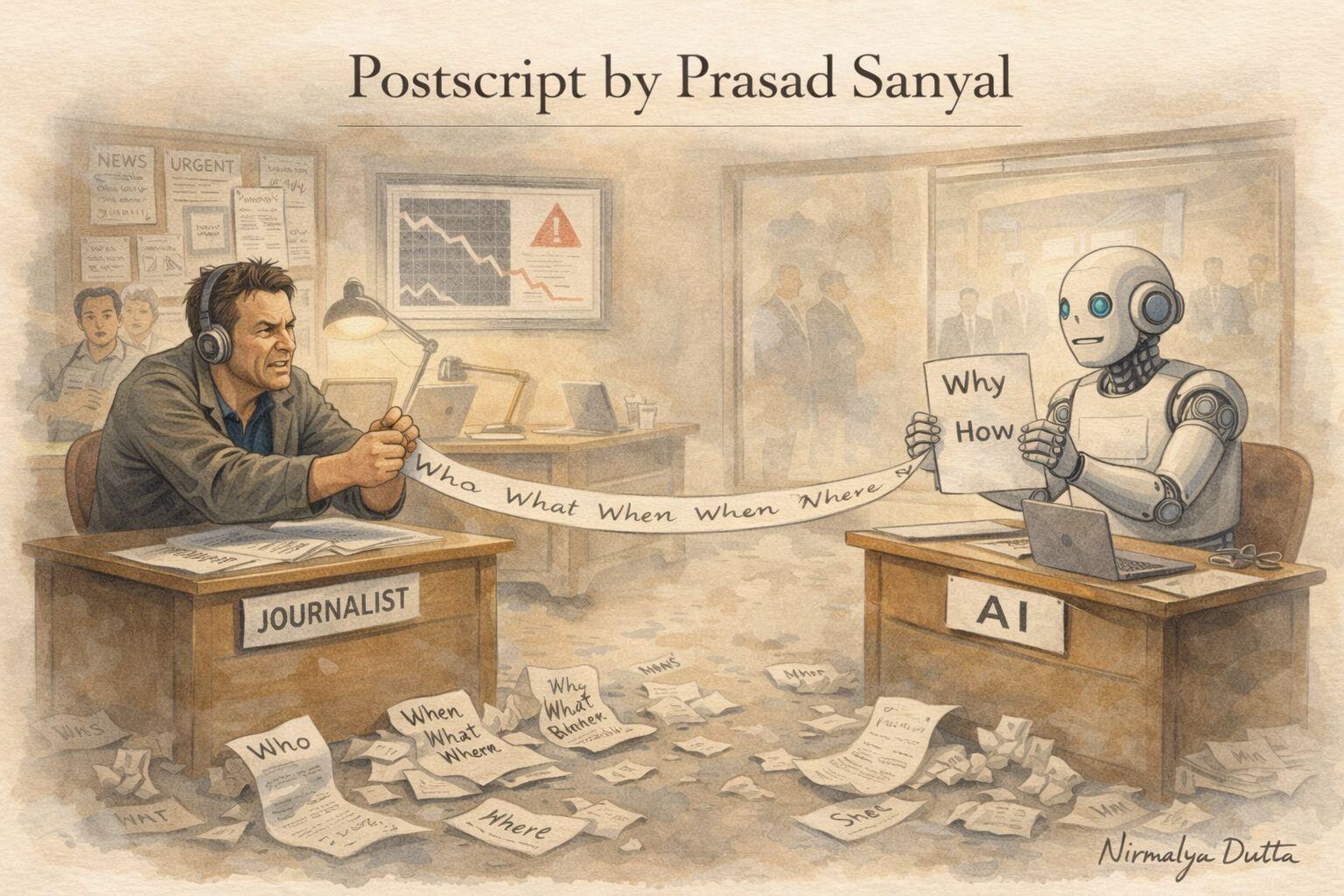
There was a time, not very long ago, when journalism believed in the tyranny of the five questions. Who. What. When. Where. And, if the newsroom gods were feeling generous, Why. It was efficient. Respectable. Industrial. Facts were assembled, quotes inserted, headlines affixed, and the reader was informed in the manner one is informed by a railway station announcement: accurate, timely, and faintly indifferent to meaning. And then arrived the machine, calm, tireless, and offended by neither deadlines nor editors. With an almost indecent ease, it began answering the first four questions better than most of us ever could.
Who? It knows. What? It summarises. When and where? It timestamps with the confidence of a Swiss clock that has never been late. Journalism, having spent decades perfecting these questions, found itself in the awkward position of having been outperformed at its own favourite game. It is at this point that every generation reaches for a familiar consolation.
Post Postscript
Word of the Week: Trumpery
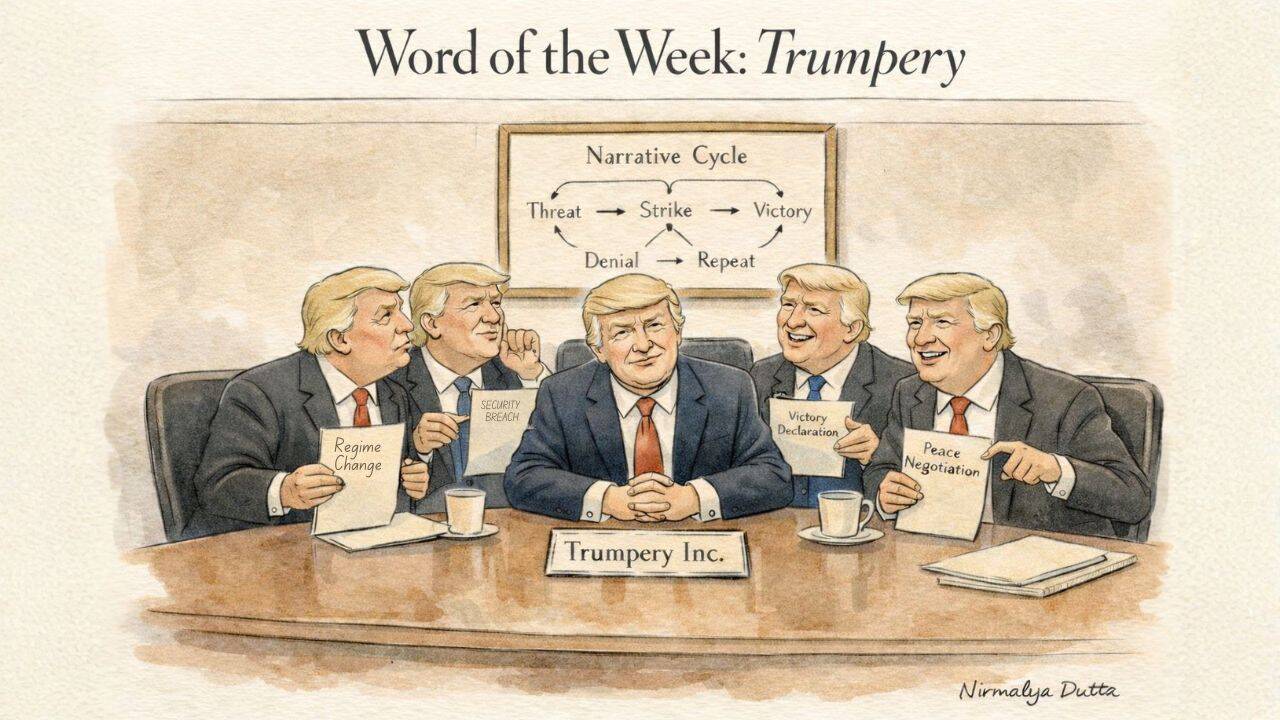
The word first appeared in English during the mid-15th century, derived from the Middle French tromper (to deceive), and it originally meant “deceit, fraud, or trickery” and later evolved to describe “attractive but useless items, rubbish, or worthless nonsense”.
In a delightful piece for the National Review in 2016 titled Trumpery and Social Darwinism, MD Aeschliman noted that Samuel Johnson, while writing A Dictionary of the English Language, defined trumpery as “something fallaciously splendid; something of less value than it seems.” And not one Vine reader needs to be told why that’s our word of the week.
Book of the Week: The Myth of Sisyphus
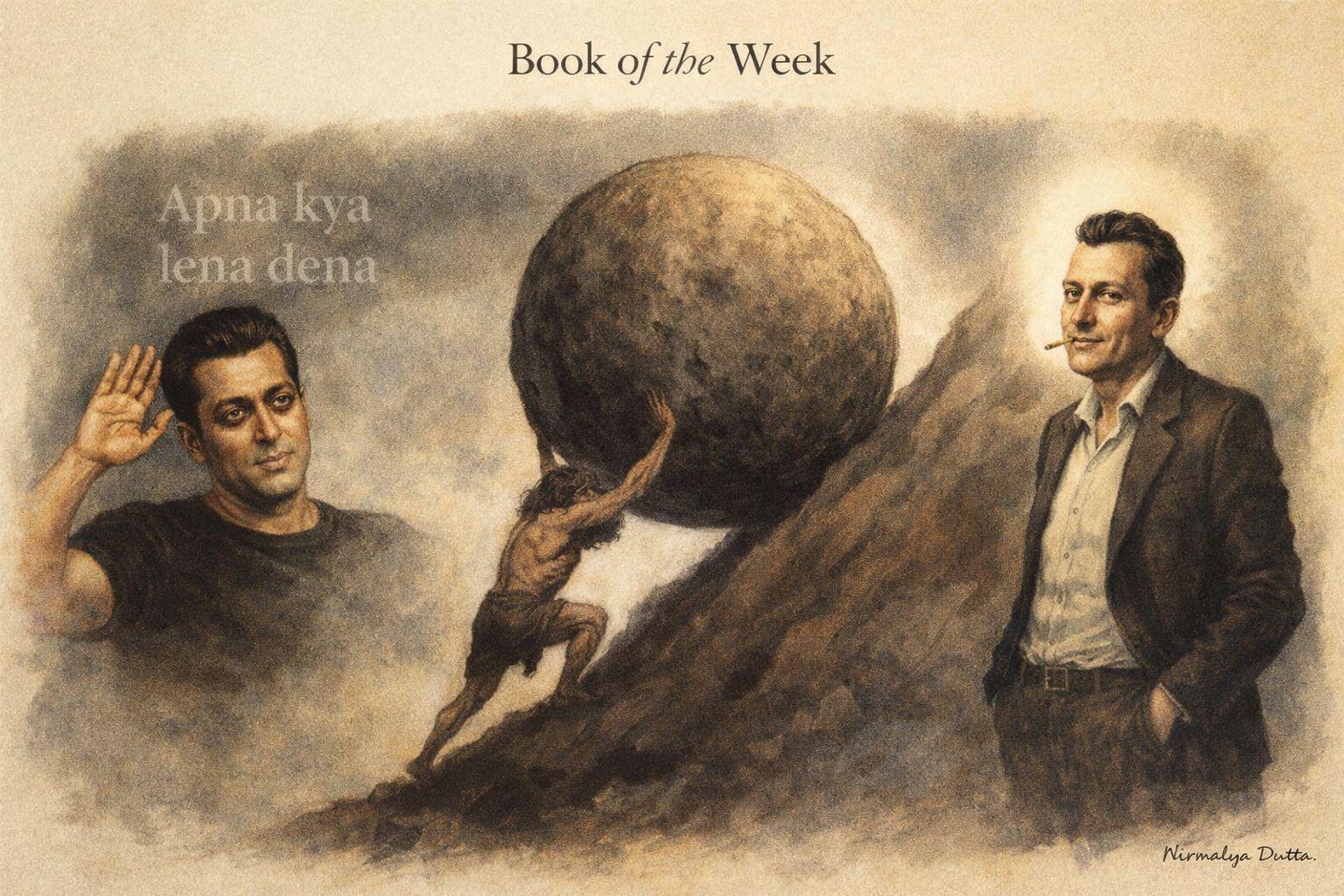
As you get older, you realise that it’s very important to have your head screwed straight. In my current avatar, I live life by the words of two philosophers: Salman Khan and Albert Camus. The first is Salman Khan’s epic tweet that simply stated: Apna kya lena dena. Once you internalise that, you realise most of life’s problems will melt away with a little detachment.
The second is from Albert Camus – a man so handsome he made fellow philosophers feel jealous when they looked in the mirror – who wrote The Myth of Sisyphus. Sisyphus is a mythological king of Ephyra (Corinth) who cheated the gods too many times and was condemned to pushing a boulder up a hill for eternity, a boulder that would roll back each day before he continued the rigmarole.
In his seminal essay, Camus takes a chisel to the human condition before concluding: one must imagine Sisyphus happy. Camus, while deciphering the absurd, comes to the conclusion that life has no meaning. Freedom isn’t escape from the meaningless; it’s clearly seeing it and refusing to be crushed by it. And once we become aware of our fate, we can all be happy like Sisyphus because: Apna kya lena dena.
Meme of the Week: Gays of Hormuz
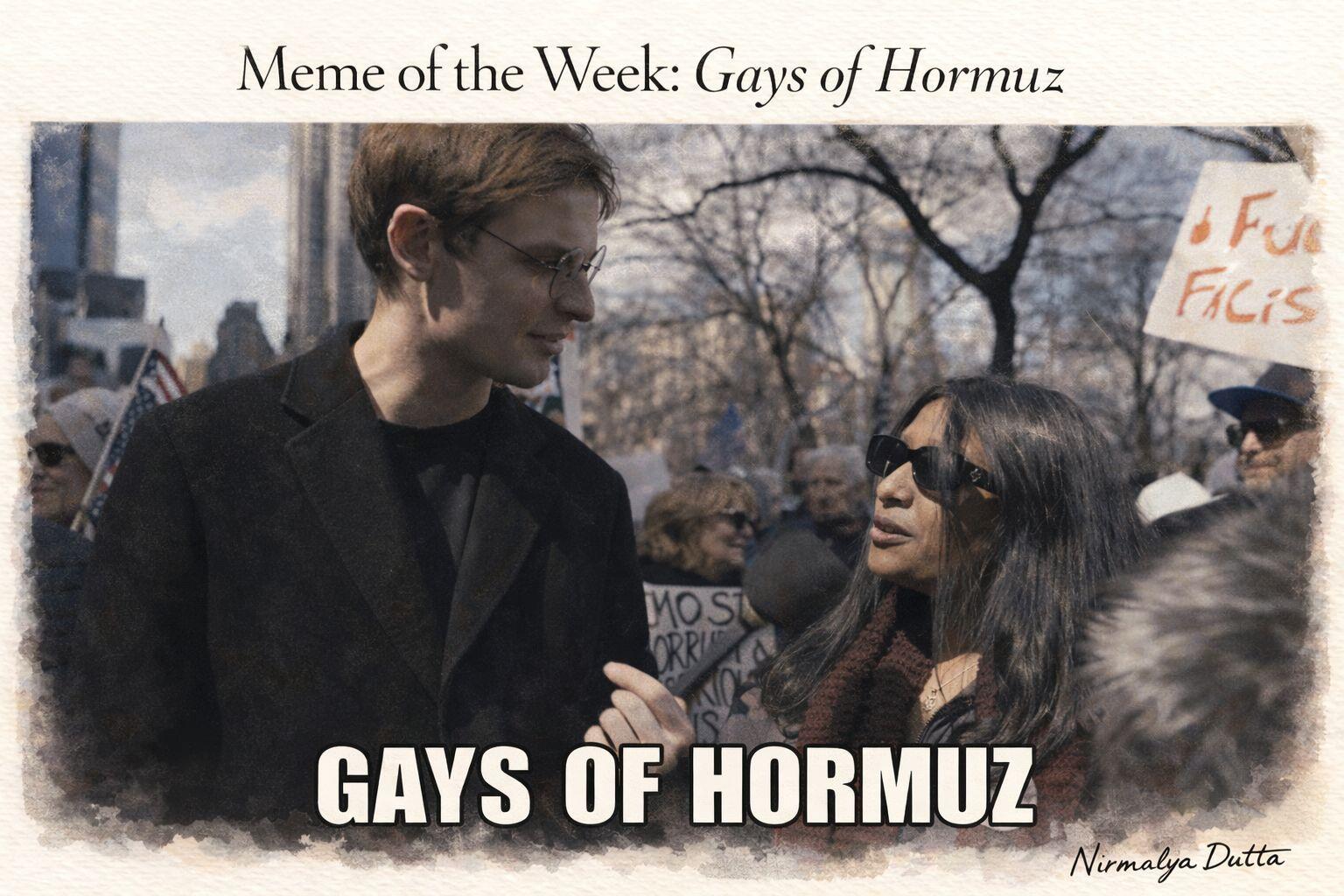
And our meme of the week is from a video by a comedy handle called No Cap on God which promises to perform ‘non-partisan, non-binary journalism’. At a No Kings protest, he asks the protester: “Isn’t it homophobic that we are focussed on the Strait of Hormuz and not the Gays of Hormuz”. The question is a reference to the Strait of Hormuz near Iran through which 20% of the world’s petroleum liquids transit.
Like most protesters at protests who are found wanting when asked what they are protesting, when asked if one needed to focus on the ‘Gays of Hormuz’, the protester lamented that historically ‘gays have always been discriminated against, even in war’ and that it will take more reform in government to educate people.
And just like that, an internet star was born. Justice for the Gays of Hormuz.
Disclaimer
Views expressed above are the author’s own.
END OF ARTICLE