 Kamal Ghorui
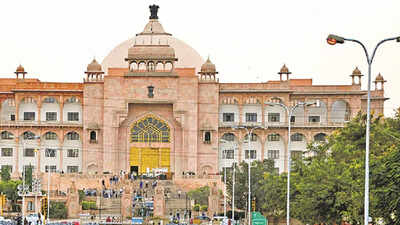
JODHPUR: Calling the state’s existing reservation policy for transgenders “mere facade and an eyewash”, Rajasthan HC on Monday directed the govt to grant an additional 3% weightage in marks to transgender candidates applying for jobs and admissions to educational institutes. HC also made scathing remarks on the Transgender Persons (Protection of Rights) Amendment Bill 2026, recently passed by Parliament, stating it seeks to take away the “right to self-determination or self-proclamation of being a third gender”. This was a deviation from the “constitutional baseline”, as articulated by Supreme Court in its landmark ‘NALSA vs Union of India’ judgment, HC said, stating that “selfhood is not a matter of concession, it is a matter of right”.NALSA judgement recognises transgenders as the third gender, guarantees their right to self-identification, and affirms their fundamental rights, directs govt to treat them as socially and educationally backward and provide affirmative action benefits .A division bench comprising Justices Arun Monga and Yogendra Kumar Purohit was hearing a writ petition filed by Ganga Kumari, who had sought quashing of a Jan 2023 govt notification, which classified transgenders under the OBC category, and demanded horizontal reservation in public services in line with the NALSA judgment.The bench sharply rebuked the state govt, underscoring the disadvantage forced upon transgender individuals from Scheduled Castes and Scheduled Tribes due to the blanket OBC classification. “The State of Rajasthan was under a clear constitutional obligation to translate the mandate of the Supreme Court into tangible policy by carving out a distinct and effective reservation framework for transgender persons. That obligation has been conspicuously abdicated. The impugned circular, far from advancing rights, reduces a binding constitutional directive to an empty ritual,” the bench said.Adding an epilogue to the judgment, Justice Monga stated that the bench, while writing its judgment, proceeded on the foundational premise established by SC in the NALSA ruling “that the right to self-identify one’s gender is an intrinsic facet of dignity, autonomy, and personal liberty. These rights are protected under Articles 14, 15, 16, and 21 of the Constitution”.“It is now proposed that legal recognition of gender identity shall be conditioned upon certification, scrutiny, or other forms of administrative endorsement. What was recognised by the Supreme Court as an inviolable aspect of personhood now risks being reduced to a contingent, State-mediated entitlement,” remarked Justice Monga.“The state must be mindful that statutory developments cannot be implemented in a manner that dilutes constitutional guarantees,” Justice Monda added.