
 Kamal Ghorui
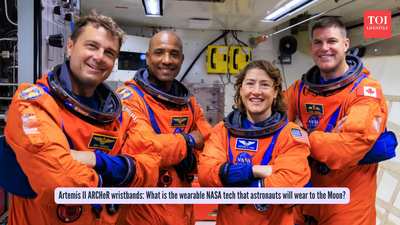
When NASA’s Artemis II mission lifts off, the four astronauts will not just be testing new spacecraft and lunar‑flight procedures, they will also be wearing one of the mission’s smallest but most important scientific tools in the form of armbands tied on their wrists, called ARCHeR.This special high‑tech band is designed to record what is happening inside their bodies and minds, far beyond low Earth orbit.Unlike missions that orbit close to Earth, Artemis II will take the crew around the Moon and back over roughly 10 days, exposing them to greater isolation, confinement, and radiation than they have faced in recent decades.Understanding how astronauts adapt in this environment is important if NASA wants to send people safely to long‑duration missions on the Moon and, eventually, to Mars.
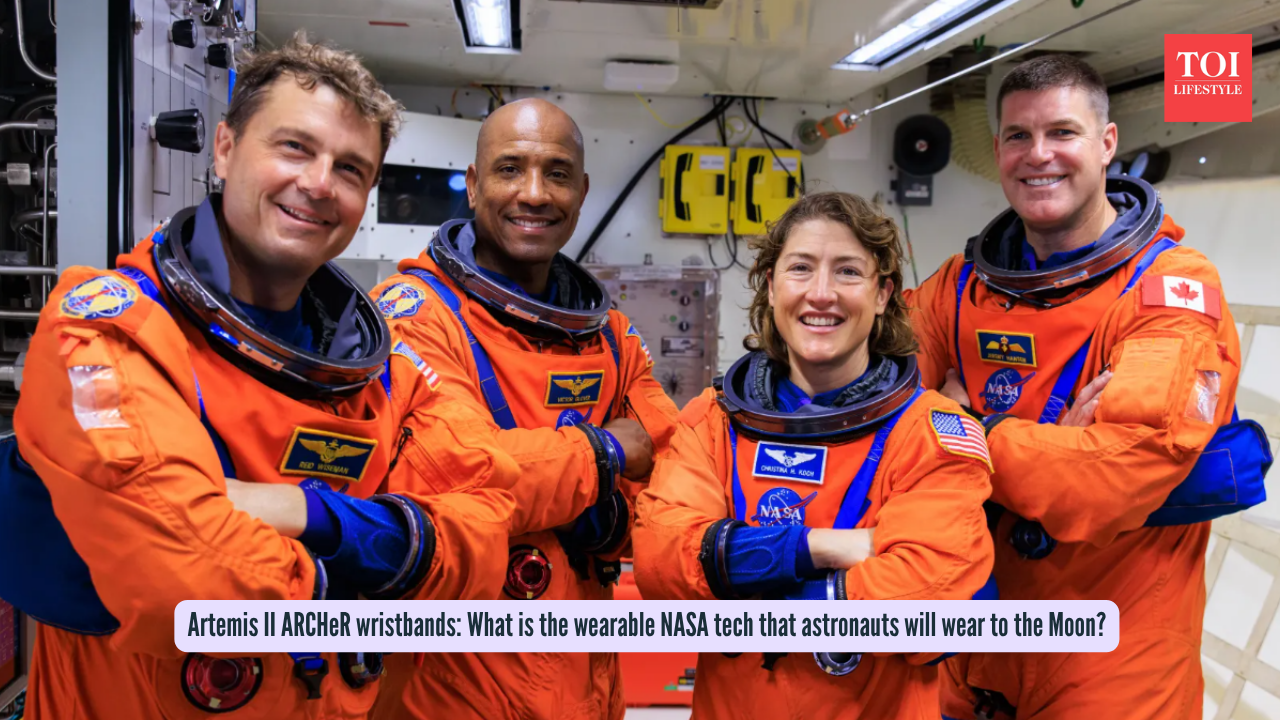
Artemis II ARCHeR wristbands: What is the wearable NASA tech that astronauts will wear to the Moon? (Photo: NASA)
All about the special wristband Artemis‑II astronauts will wear to the Moon
As Artemis II prepares for launch on 2 April 2026, the tiny wristband on each astronaut’s arm may become one of the mission’s most consequential scientific instruments.The astronauts will wear high‑tech devices as part of the Artemis Research for Crew Health and Readiness project, commonly called the ARCHeR study. According to NASA and its partners, this research will track sleep, stress, cognitive performance, and teamwork during the crew’s 10‑day journey around the Moon and back.The ARCHeR wristbands are an advanced activity and sleep monitor, similar in concept to commercial fitness trackers but tuned for spaceflight.
What does an ARCHeR wristband exactly do?
According to NASA’s Human Research Program, the devices continuously record movement and sleep patterns while the crew is in the Orion spacecraft, giving scientists real‑time information on how deep‑space conditions affect rest and physical activity.In addition to the wrist data, astronauts will also take cognitive tests and behavioural assessments before and after the mission, so researchers can compare how they function on Earth versus in deep space.The name, ARCHeR (Artemis Research for Crew Health and Readiness), denotes exactly what NASA wants to study.
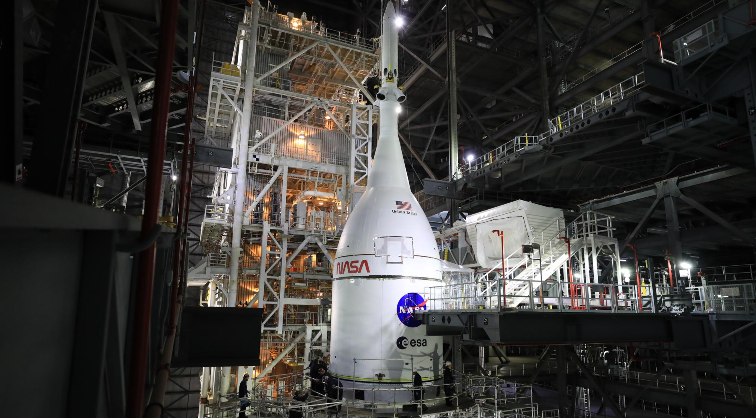
The Orion spacecraft will serve as the exploration vehicle that will carry and sustain the crew on Artemis missions to the Moon and return them safely to Earth (Caption and Photo via NASA)
Why is it important?
This research is crucial because Artemis II will be the first crewed mission to leave low Earth orbit since Apollo, and the first to fly astronauts in the Orion vehicle. According to NASA, data from the ARCHeR wristbands will help identify how astronauts react to longer‑duration missions, how they work as a team at a great distance from Earth, and how usable the new spacecraft systems are under stress.