
 Kamal Ghorui
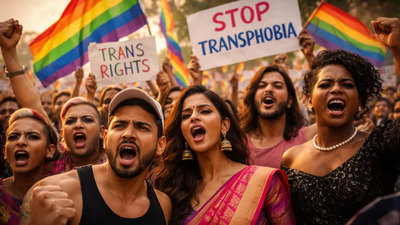
‘Cause shade never made anybody less gay’ – Taylor Swift, You Need to Calm DownLast week, two contrasting developments related to the LGBTQ+ community made global headlines. One, in the German city of Munich, Dominik Krause was elected mayor, the first openly gay man to hold a constitutional office in a European country.Second, at the same time Krause was celebrating his victory with his partner and the public, in India, Parliament passed a legislation – The Transgender Persons (Protection of Rights) Amendment bill, 2026 – striking away the statute of self-determination.That translates to taking away the individual’s right to self identification, a Constitutional guarantee, and liberty over one’s own body.

On Monday, March 30, President Droupadi Murmu assented to the bill, making the proposed legislation the law and bringing it into effect. Ironically, the ‘rights’ of the very community it claims to ‘protect’ have since risen in protest, taking to the streets to vociferously and legally push back against the proposed propositions challenging it. Not just that, the passage of the controversial bill itself created a massive uproar in both Houses of Parliament.In Lok Sabha, it was taken up last Tuesday, stopping the discussion on the Finance bill midway with Union Parliamentary affairs minister Kiren Rijiju insisting the bill needed to be passed the very day. And it did, with a voice vote amidst the din in the House, opposition walking out and an exhaustive two-minute-long reply by the concerned minister for social justice and empowerment Virendra Kumar.The story was no different the next day in the Upper House, the proposed legislation passed while the opposition demanded that it be sent to the select committee.

Speaking on bill, NCP(SP) MP Fauzia Khan said “Viksit Bharat slogan shouldn’t be about ‘selective’ Bharat.” Replying to which Kumar argued, every person’s emancipation and empowerment, asserting that the amendment will ensure that transgender persons continue to get legal recognition and protection. But, with a caveat, that a ‘magistrate’ and a ‘medical board’ would somehow determine if you are a trans person and qualify for rights, and that they would be protected.Anish Gwande, LGBTQ+ rights activist and national spokesperson of NCP(SP), also first openly gay person to hold such office for a major political party in India, speaking to TOI described the bill as “illegal, unconstitutional and illogical” adding “it is unfortunate that the bill was passed by both houses of Parliament without any substantive discussion within 24 hours.” He went on to question the timing of the bill, “It is bizarre to see governments focus on amendments to the trans bill, instead of war in West Asia, on LPG crisis in the country, on the depreciating Rupee.”
The gender question
For many the world exists in two colours – ‘black and white’, but it still leaves a population embracing the ‘greys’. The greys believe in facets of being agathokakological – the in-between areas, complexity, nuance, mixed feelings, or situations that aren’t purely one thing. A concept alien to the binaries. Similarly, what and how an individual feels about their ‘own’ body, nobody else can understand or tell but that particular individual. To understand this, it becomes essential to distinguish between sex and gender, terms often used interchangeably but conceptually distinct.
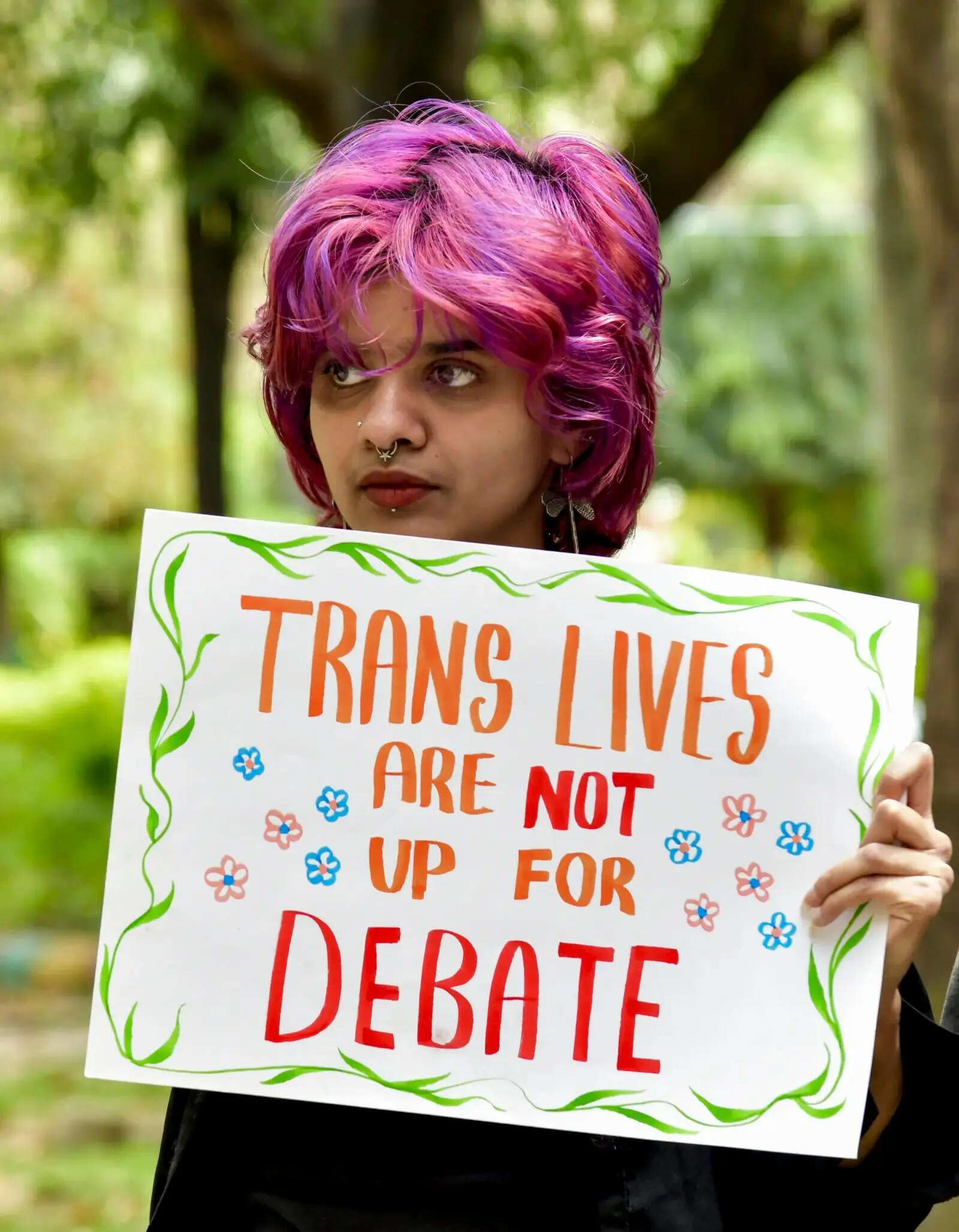
Biological sex typically refers to physical attributes such as chromosomes, hormones, and reproductive anatomy, usually categorised as male or female. Gender, however, is understood in scholarly literature as a social and psychological construct that encompasses identity, roles, expressions, and lived experience. As philosopher Judith Butler argues, gender is not something one simply is, but something one does – a continuous process shaped by social norms and personal agency.Similarly, the World Health Organization defines gender as the characteristics of women, men, girls and boys that are socially constructed, including norms, behaviours, and roles associated with being a particular gender. This understanding moves beyond rigid binaries and acknowledges that gender exists along a spectrum. The American Psychological Association further recognises gender identity as a deeply felt, inherent sense of being male, female, a blend of both, or neither, an internal experience that may or may not align with the sex assigned at birth.In this context, the idea of the ‘greys’ is not merely poetic but empirically grounded. Contemporary gender studies consistently affirm that human identity resists strict categorisation. What appears as ambiguity to the binary lens is, in fact, a legitimate and lived reality for many.Thus, gender is not a fixed endpoint but an evolving narrative, one that is deeply personal, socially mediated, and often negotiated within structures that struggle to accommodate its fluidity.
The Transgender persons (protection of rights) amendments Act 2026
What the Act entails
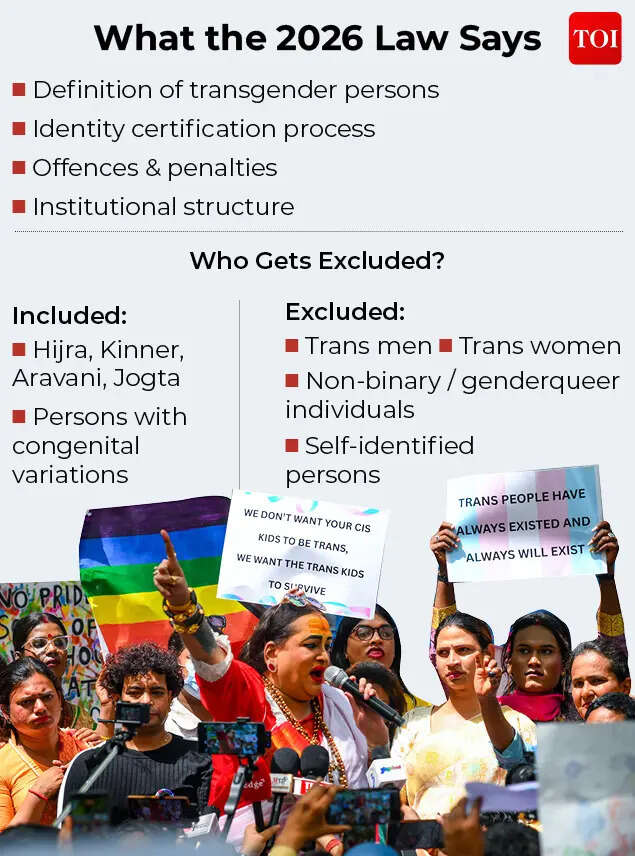
The legislation introduces changes across four key areas:
- Definition of transgender persons
- Process of identity certification
- Offences and penalties
- Composition and functioning of institutional bodies
The government’s Statement of Objects and Reasons argues that the earlier definition was “vague” and made it difficult to identify “genuine oppressed persons.” It further clarifies that protections should not extend to “self-perceived identity” or what it terms “acquirable characteristics.”
This framing signals a shift in legislative intent, from recognising identity as self-determined to one that is externally verified.
Key changes in the provisions
A narrower definition
The Act replaces the broader 2019 definition with a more restrictive one. It identifies transgender persons under two categories:
- Those belonging to specific socio-cultural groups, such as kinner, hijra, aravani and jogta, or individuals with congenital variations in sexual characteristics, including differences in chromosomes, genitalia, hormones or gonadal development.
- It also includes a category of persons who have allegedly been compelled, “by force, allurement, inducement, deceit or undue influence, either with or without consent”, to assume or present a transgender identity, reeking of the underlying premise of the Act.
Notably, it excludes persons with “self-perceived gender identity” and those with different sexual orientations. As a result, trans men, trans women and genderqueer individuals who do not fall within these listed categories are effectively excluded. The inclusion of the term “eunuch”, a classification historically rooted in the Criminal Tribes Act, 1871, where it was defined in medicalised and derogatory terms, marks a notable shift in a contemporary rights framework.The amendment also removes a distinct recognition of intersex persons, subsuming them under a clinical category termed “congenital variation,” thereby reinforcing a medicalised lens.The replacement of the term “intersex” with “congenital variation” reflects a shift towards a medicalised framework that frames such identities as conditions requiring diagnosis or correction. This approach sits in contradiction with existing administrative systems, such as birth registration, which continue to operate within a strict male–female binary and do not accommodate intersex identities.Sneha, a Delhi-based doctor, says, “The congenital variations basically refer to conditions which can be fixed with medical treatments, but pulling that in to refer to people of different gender makes no sense, how would you fix it and beyond that, what if someone just isn’t willing to get it changed?”It also raises concerns around autonomy and privacy, as it introduces the possibility of mandatory medical scrutiny for identity recognition. In doing so, the framework risks reducing inherently personal and lived experiences of identity to clinical evaluation, rather than recognising them as legitimate expressions of self. The Act’s treatment of socio-cultural identities has also drawn criticism for being selective and exclusionary. While it recognises a limited set of traditionally acknowledged identities, several region-specific and culturally rooted identities, particularly from the northeast and parts of south India, find no mention, like the Nupa Maanba or Nupi Maanbi, which are traditional socio-cultural identities existing in Manipur. This omission raises concerns about the erasure of diverse lived realities that fall outside the listed categories. Questions have also been raised over the lack of consultation with statutory advisory bodies meant to represent transgender persons, further deepening apprehensions that the law does not adequately reflect the diversity within the community it seeks to regulate.
Medical board for certification
Under the 2019 law, individuals could apply for identity certificates based on self-declaration. The amendment introduces a medical board, led by a Chief Medical Officer, whose recommendation becomes central to the process. The district magistrate will be the final person to decide on the recommendation and may also seek further medical opinions.
Mandatory reporting by hospitals
Hospitals performing gender-affirming surgeries must now report details of such procedures to authorities, including district magistrates and medical boards.
Stricter penalties
The Act introduces stringent punishments for offences such as coercing individuals into transgender identity, with penalties ranging up to life imprisonment depending on the nature of the crime and the age of the victim.Gwande, said it is plainly absurd that the law will introduce something “which would only discourage the people who work for and with the community, by criminalizing it in a manner as such when there is no clarity as to what would amount as allurement, or coercing.”
What are the major departures from the 2019 law?
At the heart of the 2019 Act was the principle that gender identity is self-perceived. It explicitly recognised a wide spectrum, including trans men, trans women, non-binary and genderqueer persons, and did not mandate medical intervention.The 2026 amendment removes this foundation.By eliminating the provision for self-perceived identity, the law narrows eligibility and excludes large sections of the transgender community. It also introduces a retrospective clause stating that such identities “shall not include, nor shall ever have been so included,” raising concerns about the status of thousands already recognised under the previous law.
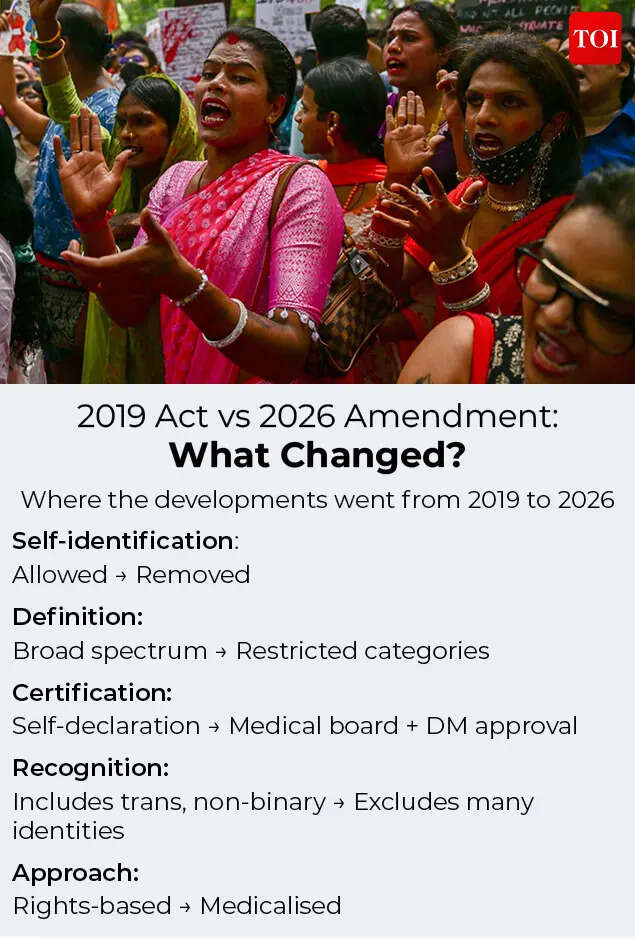
Legal experts note that this shift moves away from the Supreme Court’s 2014 judgment in National Legal Services Authority (NALSA) vs Union of India, which held that self-determination of gender is a fundamental right under Article 21.
Why has the Act faced fierce opposition?
The opposition from the transgender community has been swift and widespread.“From the start to the end this bill is completely arbitrary, nonsense, and it violates every kind of human right that is possible on the planet,” said Baadal, a trans activist.
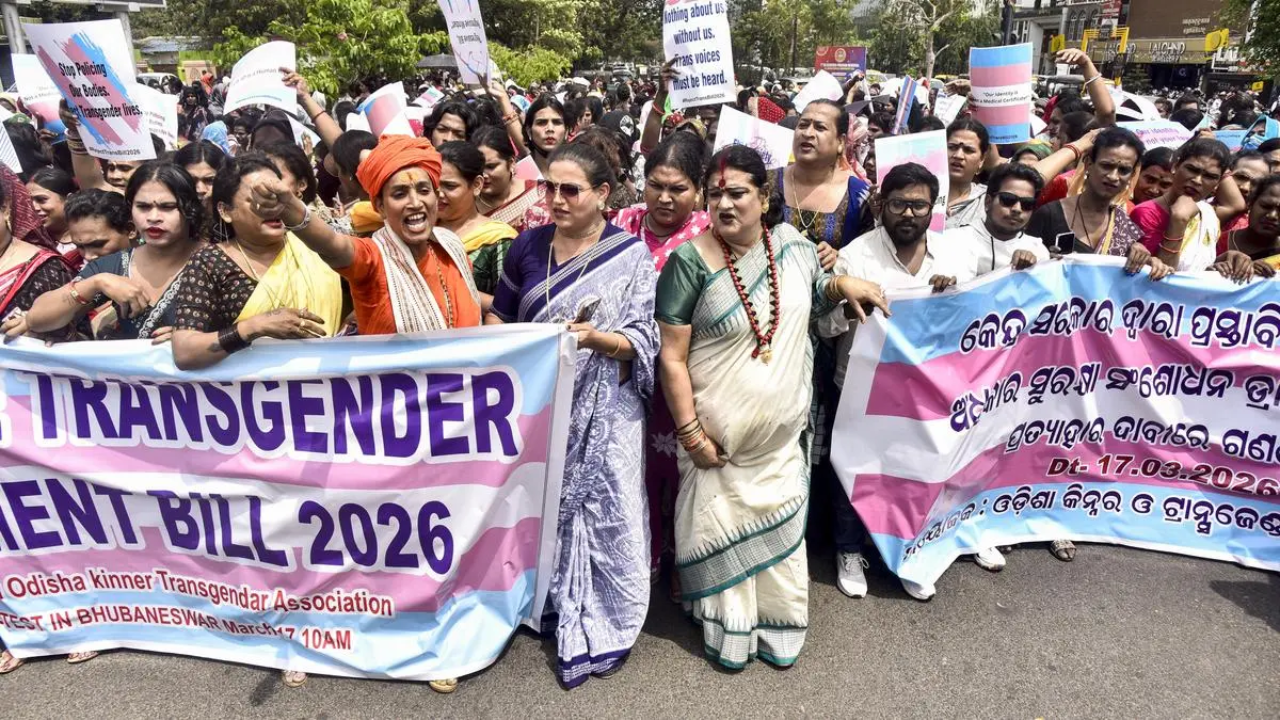
At the core of the protests is the removal of self-identification. Activists describe the introduction of medical boards as “medical gatekeeping,” arguing it places identity under institutional scrutiny.Mumbai Queer Pride, in a statement, said the law risks erasing transgender persons “under the guise of medical scrutiny.” Another major concern is the lack of consultation. Members of the National Council for Transgender Persons reportedly said they were not consulted before the bill was introduced.Gwande said they have asked for an unconditional apology from the officials of ministry of social justice and empowerment for “refusing to meet the representatives of the community and also insulting them.”Two members of the National Council of Transgender Persons (NCTP), Kalki Subramanium and Rituparna Neog, stepped down from their positions after the Rajya Sabha approved the controversial bill. Describing the bill as “regressive” and “existential,” they stated they could not continue being part of a council that the government chose not to consult.In her resignation letter addressed to minister Virendra Kumar, Subramanium, who represented the southern states on the council, said that “the recent introduction and passage of the Transgender Persons (Protection of Rights) Amendment bill” has “created an untenable position” for her.She further wrote, “As a statutory representative, my primary mandate is to advise the Government on legislation affecting our lives. The decision to move this bill forward without any formal consultation with myself or other community representatives of the NCTP undermines the very purpose for which this Council was established.”Highlighting her recent engagements, she added, “I have spent the last several weeks in constant dialogue with the transgender and intersex communities across the Southern Indian states and throughout the nation. The consensus is absolute: this bill is seen as a step backward for our fundamental rights to self identification and dignity.”
Legal tenability
Legal experts argue that the Act may face constitutional challenges.The NALSA judgment had explicitly rejected biological tests for determining gender and affirmed self-identification as a constitutional right.It also drew from international frameworks such as the Yogyakarta Principles, which state that no one should be forced to undergo medical procedures for legal recognition of gender identity.Karan Singh, a lawyer, talking about the legal standing of Act said, “on face of it the legislation itself seems to fall flat on multiple legal grounds, it stands in straight contradiction/violation of the NALSA judgement, the privacy of people choosing to undergo procedures is at stake, again violative of right to privacy, dignity under Article 19, and also the doctor-patient confidentiality is seemingly being violated as well.”
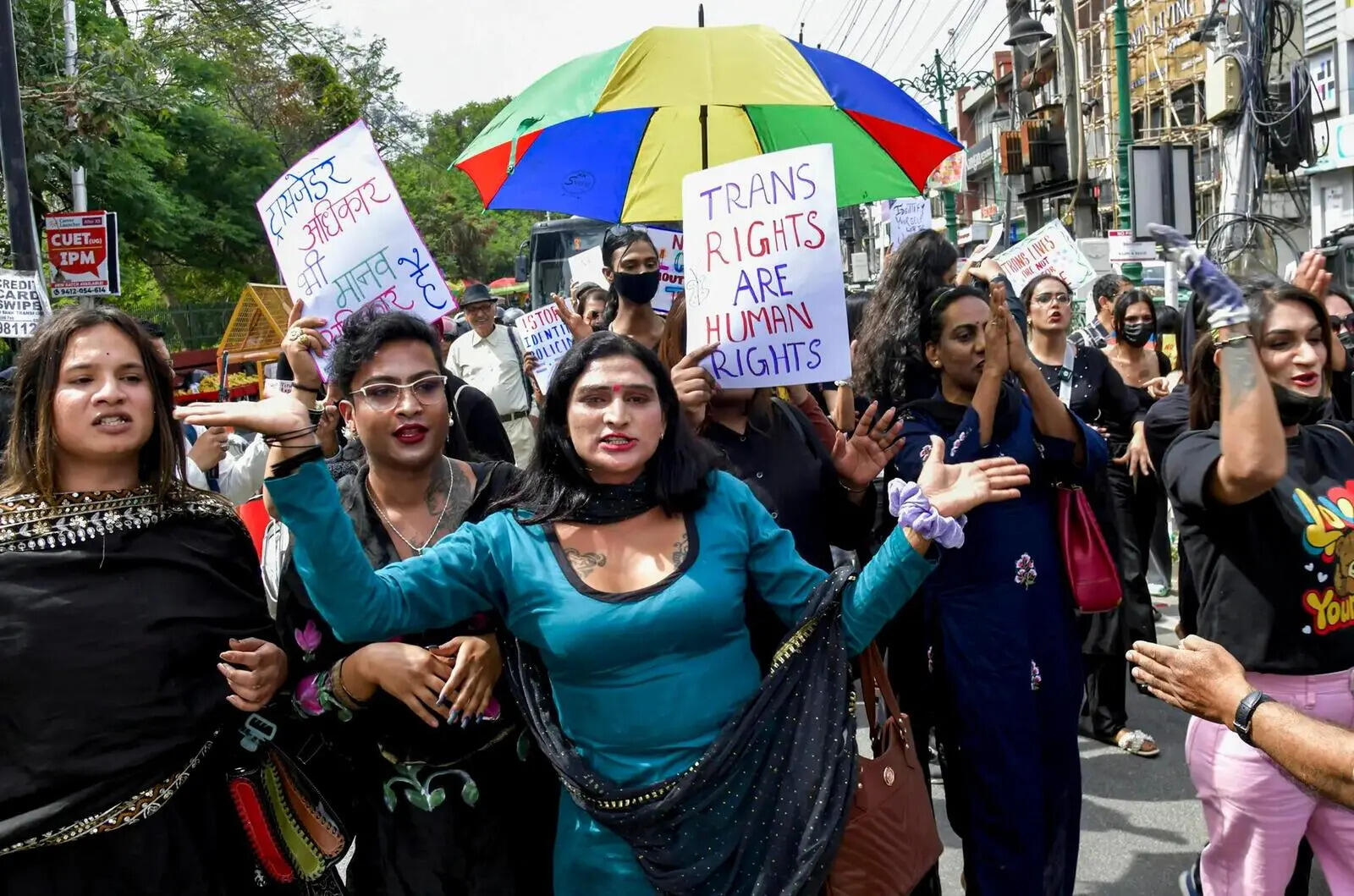
The introduction of mandatory medical certification and reporting requirements raises concerns around privacy as well. In KS Puttaswamy vs Union of India (2017), the Supreme Court recognised informational privacy as a fundamental right.Critics argue the Act does not clearly establish a legitimate state interest for collecting sensitive medical data, nor does it define safeguards.A Supreme Court-constituted advisory committee on transgender rights had urged the Centre to withdraw the bill, immediately after it was passed by Parliament, citing concerns that key provisions violate established legal principles. The panel, headed by former Delhi High Court judge Justice Asha Menon, wrote to Minister Virendra Kumar on last Wednesday.In its resolution, the committee flagged that the proposal to deny the right to self-identification of gender runs contrary to the Supreme Court’s 2014 NALSA v Union of India judgment, which recognised this right without requiring medical intervention. The panel cautioned that replacing self-identification with a state-controlled certification process, mandating assessment by a medical board, marks a significant departure from the court’s ruling.The committee was set up by the Supreme Court in October 2025 while hearing a case involving the dismissal of a transgender woman from teaching jobs in Uttar Pradesh and Gujarat. It was tasked with identifying gaps in the implementation of the Transgender Persons Act, 2019, and recommending measures to ensure equal participation and “reasonable accommodation” for transgender persons.
Impact on privacy, acceptance, individuality
Beyond legality, the Act’s implications extend to everyday life.Identity certificates are gateways to welfare schemes, healthcare, and employment opportunities. By making certification more complex, activists say the law may limit access to these benefits.The requirement for hospitals to share details of gender-affirming procedures has raised concerns about surveillance and stigma.“There is no medical test to prove anyone’s gender,” said Sneha. “But we are asked to prove it.”Activists also warn of a “chilling effect”, where social workers, NGOs, and even families may hesitate to support transgender individuals due to fear of legal consequences.While speaking on bill in Rajya Sabha Congress MP Renuka Chowdhury asked a pertinent question, pointing to treasury benches she said, “do you know what LGBTQ+ is? Can even four people sitting in the house tell me the meaning, I’ll accept the amendment.”She further added, “When there isn’t enough awareness in the Parliament, how is it gonna be on the streets and society?”
The road ahead
While the government maintains that the amendments strengthen protections, the response from the community suggests otherwise.“If it becomes law, we will challenge it,” Gwande said. He had also expressed hope that the President would not give her assent to the bill, after multiple rights organizations had written to her asking to return the bill to Parliament for reconsideration. But, the bill got Presidential assent on Monday. For many, the issue goes beyond a single piece of legislation. It touches upon the fundamental question of autonomy.As the Supreme Court observed in NALSA, “the moral failure lies in the society’s unwillingness to contain or embrace different gender identities.”The current conditions suggest that the question remains unresolved, and is now being tested in law.